
The Inevitable.
Was a Holocaust bound to happen?

As always, on this platform, I am not your doctor, this is not an office, don’t treat these words as prescription. Take what you want, and leave the rest. If you need medical advice, please consult your actual doctor. If I am, in fact, your actual doctor, come see me in clinic and we can get it sorted out. In case of a medical emergency, call 9-1-1.
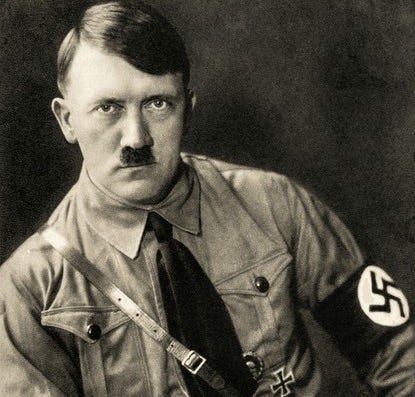
Spicy take: I think a Holocaust was inevitable.
(Take a breath— what just came up for you? Are you freaking out? Did you just wonder if I was a neo-Nazi or completely out of touch with the injustice of the world? I’ll leave that up to you. Remember: Your first thought is your survival thought, not your best, most truthful thought. Keep thinking. Keep reading.)
I remember a while back there was some rumor that Hitler’s mom considered getting an abortion when she was pregnant with him, and that propagandous claim fueled many a pro-life/pro-choice debate. The New York Times even polled its readers regarding their thoughts— would it have been justified? If she had aborted her baby, it would have saved six million Jews from brutal murder and genocide. Wouldn’t that be worth it? Some would say yes.
For a real wild rabbit trail, check out the Wikipedia page called “Killing Baby Hitler,” where they discuss various philosophical arguments for and against his assassination1:
The Utilitarian argument, which holds that the ethics of a dilemma are based on whatever maximizes total happiness and minimizes total suffering: killing baby Hitler is justified because it saves the lives of six million others (including some babies).
The Deontological argument, which holds that the ethics of a dilemma are independent of its circumstances and consequences: killing one baby is never justified because murdering someone is always wrong, no matter how many people that someone may end up murdering.
What do you think? Where are you landing right now?
Here’s my thing: Nature abhors a vacuum.

Hitler’s mom could have easily aborted her baby, and I feel quite sure that somehow somewhere another racist tyrant (possibly more ruthless than Hitler) would have risen up. Maybe not from Germany. Maybe not against Jewish people. But I think some other Holocaust-like event would have taken place regardless.
(tiny secret: it actually has. multiple times.)
Sometimes I think we fall prey to the idea that life runs a singular course with a minimally finite spectrum of possibilities. We imagine that the “Holocausts” of the world could be prevented by a single tweak in the streamline of decisions— eliminate baby Hitler and you eliminate the whole Holocaust. But we’ve all heard of the butterfly effect, and I think that applies here. We have no idea what else could have transpired if Hitler had never been born and risen to power. Just like we have no idea what we are missing out on because someone somewhere did abort their baby for whatever reason, good or bad.
I’m starting to believe that life doesn’t actually run that singular of a course. I think physicists are even starting to find scientific evidence for this crazy notion. (When they do, and when I can actually understand their jargon, I’ll write a Journal Club about it.) In my mind, there are a myriad of combinations of life outcomes for each person, and therefore, for each society, and therefore, for the world.
I could have been a journalist. You could have been a lung doctor. I could have married my college boyfriend, and you could have gone on your honeymoon to Iceland. I also could have been born into slavery in the Congo and you could have been kidnapped and held hostage in Mexico.
We could have become Hitler.
(Take another breath, if you need one. You are not Hitler. But for a moment, lean in to the fear— what makes you terrified of being Hitler? There are a multitude of reasons; I’m curious which it is for you. Is it, that you’d be responsible for mass genocide? Is it, that your whole life would be fueled by an undying malignant rage against a group of innocent strangers? Is it because of the mustache? It’s the mustache, isn’t it?)
I think the greatest terror I feel when I consider being Hitler, is that his actions, his perspectives, his hatred, feel so counter to my being that it makes me feel entirely out of control of myself. I don’t want to murder a whole bunch of people (I don’t even want to murder a single people), and yet I would be obligated to do so.
A couple months ago, I suffered a small cold (read: TOTAL MENTAL BREAKDOWN), and despite my advanced medical training, it took me a very long time to diagnose it. I was anxious, I had a short fuse, I couldn’t seem to juggle all the plates I had spun in the air (mixed metaphor, I know). You could have flushed me down a toilet and I wouldn’t have spiraled as much as I did that week.
In hindsight (read: after Tommy took off his shirt and cradled me in some much needed skin-to-skin), I can see exactly what happened. I had finally found myself outside of the feedback safety net I’d lived in my entire life, where teachers, preachers, attendings, parents, older sisters, opinionated friends, and even more opinionated strangers on Instagram all told me how to live and what choices to make. I always had someone around who told me if I was “doing the right thing,” and suddenly I no longer had that. That feeling of helplessness, that same lack of control that scares me so much about becoming Hitler was the thing that made me spiral.
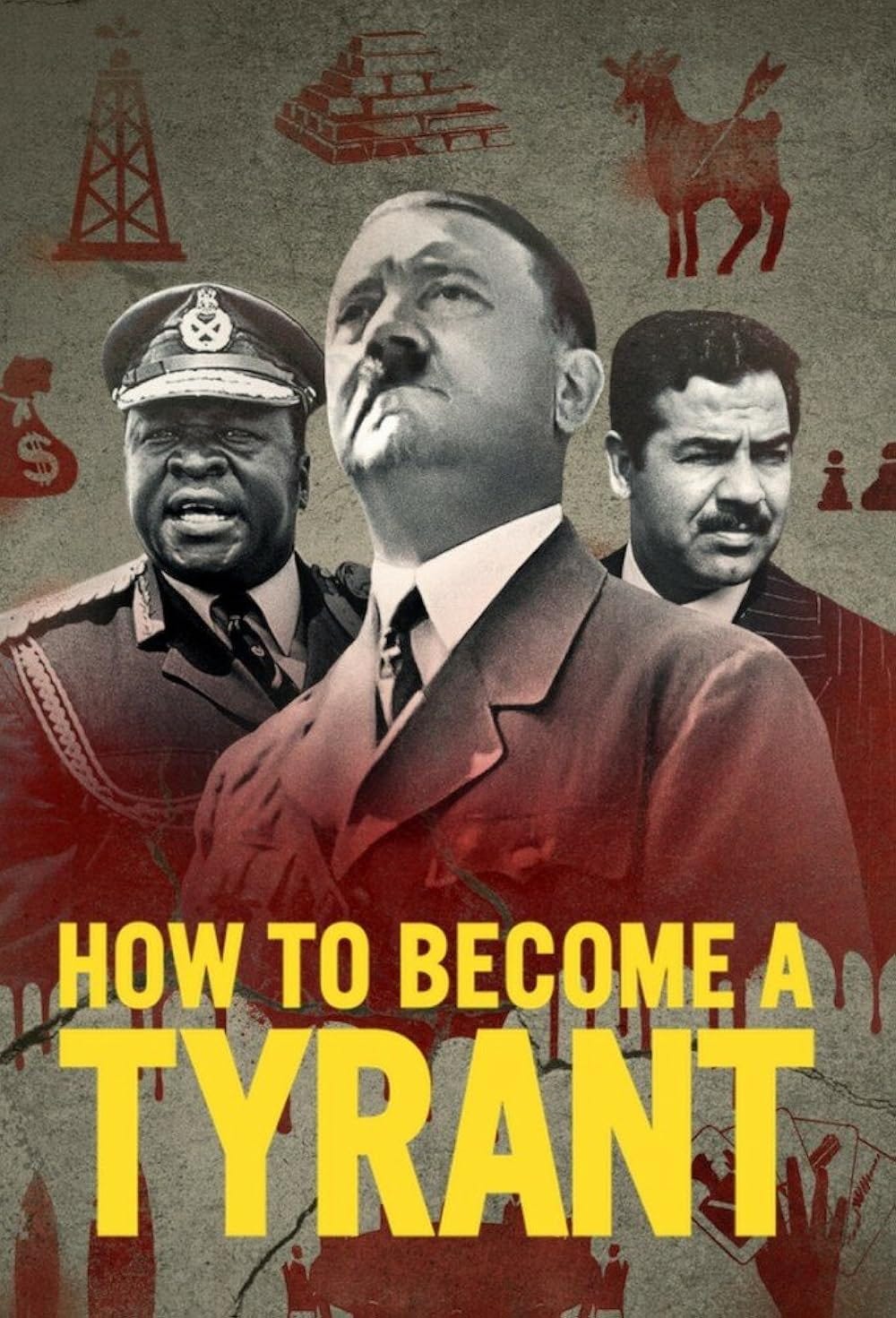
On the polar opposite end of that helplessness spectrum, is tyranny. If you study the tyrants of the world (or if you, like me, just watch “How to Become a Tyrant” on Netflix), you’ll learn that a tyrant is nothing without their control. Anyone who threatens the reign of one of these dictators faces lethal consequences. And for most of these tyrants, the moment they lost their control (military siege, rebel coup, failure of their health), they also lost their lives. It’s no wonder they clung so tightly.
So, where’s the happy medium? Where is the world that is somewhere in between total apathetic helplessness and complete, dictatorial dominion?
I’d love to show you.
The same iteration of the world that rendered the Holocaust, also made room for a hero named Corrie Ten Boom. During the Holocaust, Corrie Ten Boom and her family hid about 800 Jewish people in a secret room in their home, sparing them the tortures of the concentration camps; when she was found out and arrested, she herself was brought to a concentration camp, and in her story, she famously forgave a former Nazi guard for the role he played in the world’s suffering. She could have harbored that hatred and bitterness; she could have slapped him, ridiculed him, imparted any sort of revenge, and according to the Utilitarian argument, she would have been more than justified. Instead, she saw that a life weighed down by bitterness and unforgiveness was not inevitable; it did not have to be her story.
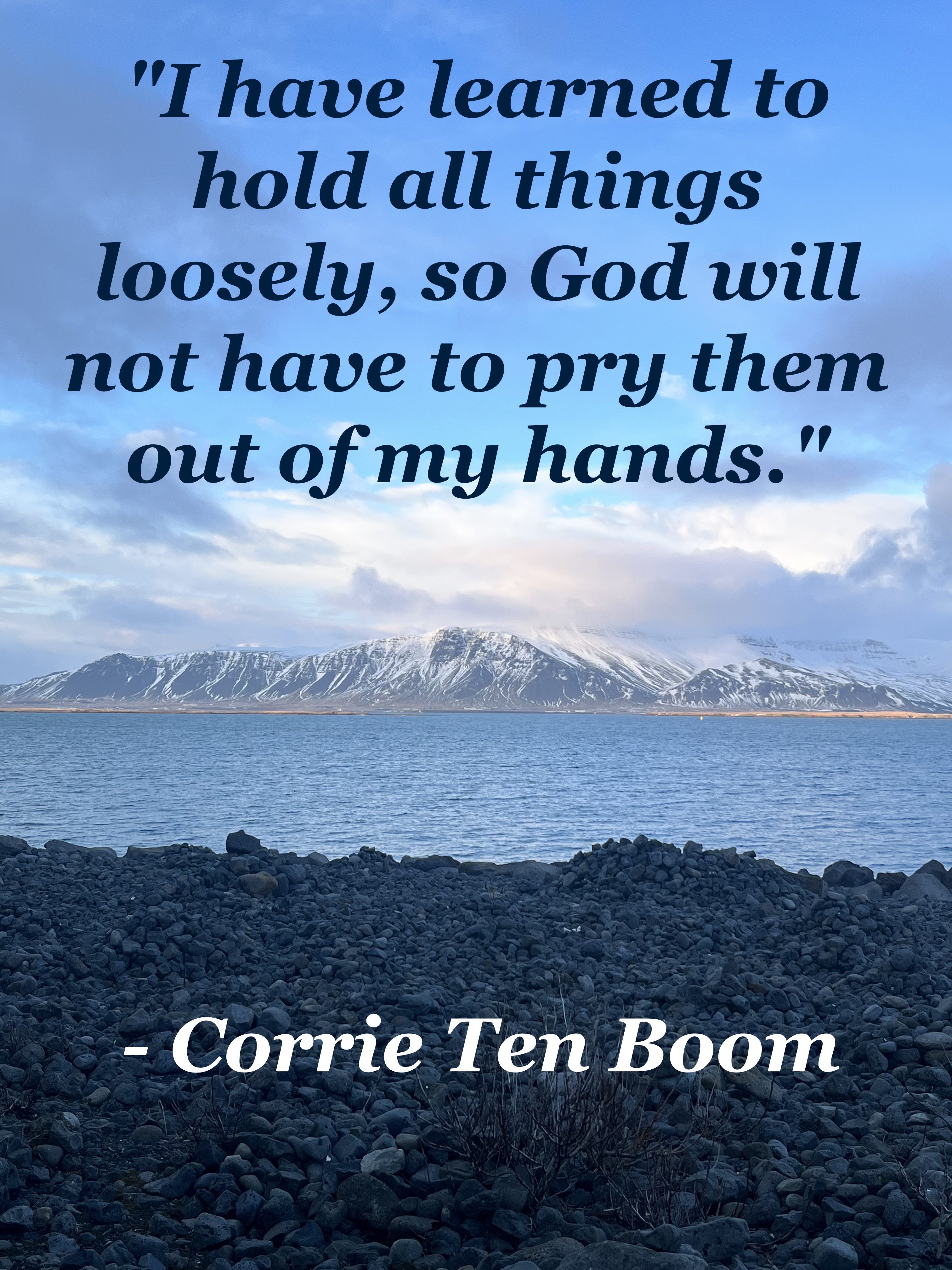
Corrie Ten Boom reminds us that there is a meaningful middle, and it usually lies in our response to the joys and injustices of the world, not on a global scale, but rather as they come across the metaphorical desks of our lives. Corrie Ten Boom didn’t set out to end the Holocaust; instead, when a woman in need knocked on her door, she and her family responded. Slowly but surely, that one refugee turned to 800.
Technically, Hitler also started out small, he just went in the other, less hospitable direction. Capitalizing on the Germans’ post-World War I disillusionment, he used propagandistic speeches to stir up anti-semitic hatred and develop a small Nazi Party following of about 60 members. Slowly but surely, that small following turned into 8.5 million.
The difference is the direction. The difference is the response. The difference is what I call Stewardship.
Stewardship is the management of the things that are yours to hold, and the release of those things when they no longer are. Stewardship is acknowledging that we are not God, so we do not have total control; it is also acknowledging that we are co-creators with God, so do not have total absolution. Everything we are given, every dollar, every job, every opportunity, every trigger, every anxious thought, every sleepless night— they are all invitations to steward well.
The thing God has called us to steward most is our selves. Our lives. If you don't want to become a Hitler, then don’t. You have that power, broken down into each decision and reaction you make. If you do want to become a Corrie Ten Boom, then do so, with each decision and reaction you make.
I would like to remind you, though, your name is not Adolf Hitler, nor is it Corrie Ten Boom, and therefore, you are not called to the stewardship of their lives.
You are called to the stewardship of your life. Only you live your life. Only you have the opportunity to shape your contribution to this dynamic and inevitable world.
How will you respond?
Is it considered assassination if baby Hitler is still a baby and not yet as notorious? I digress…